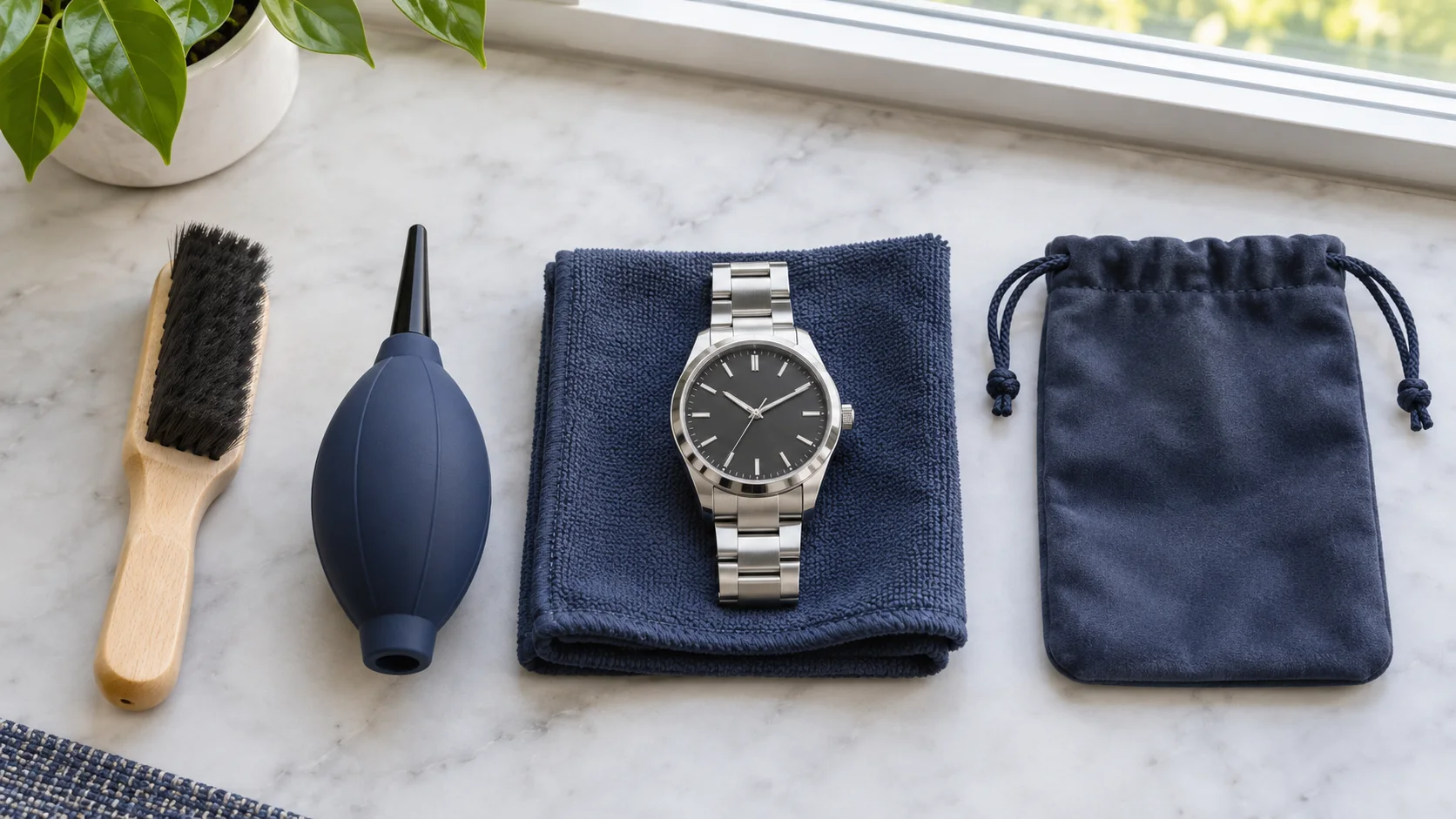
Good watch care is mostly careful observation and small routines. It does not require constant polishing or opening the case. Keep the exterior clean, notice changes in operation, protect the seals and let a qualified watchmaker handle work that needs tools or diagnosis.
Use a short after-wear routine
After normal wear, wipe the case, crystal and bracelet with a clean microfiber cloth. This removes skin oils before they collect dirt around the bezel, crown and links. If the watch has been exposed to salt water, follow the maker's rinsing guidance and confirm that the crown is secured. A water-resistance rating is essential before using water for cleaning.
Do not use abrasive paste, household metal polish, solvents or ultrasonic cleaning on an assembled watch. Ultrasonic energy can affect a watch or loosen material, and it is not suitable for many complete watches. Leather should be kept away from soaking and direct heat. Fabric and rubber strap care depends on the material and hardware.
Water resistance must be maintained
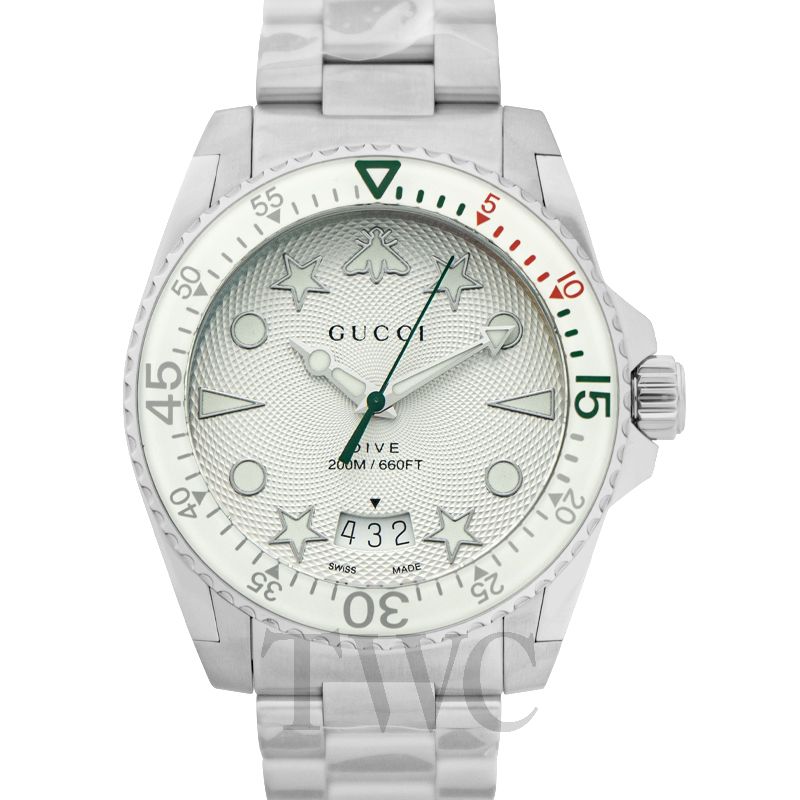
Water resistance describes a tested condition, not a permanent property. Gaskets age, crowns wear and impacts can compromise a seal. A printed depth rating also does not explain every permitted activity. Follow the manufacturer's use guidance and arrange a pressure test before relying on an older or recently serviced watch in water.
Never pull the crown or operate pushers underwater unless the exact model is designed and documented for that operation. If moisture appears beneath the crystal, move the watch away from heat and seek professional help promptly. Attempting to dry it with a hair dryer can damage seals without removing moisture from the movement.
Monitor rate, power reserve and controls
A mechanical watch should be judged over several days against the same reliable reference time. Note sudden changes, not just a single gain or loss. Reduced power reserve, a rough winding feel, a crown that no longer engages correctly or a chronograph that fails to reset are reasons for inspection.
For quartz watches, replace a depleted battery without unnecessary delay. Solar watches need suitable light and should not spend long periods fully discharged. The watch movements guide explains how these systems store and use energy.
Limit magnetism, impact and extreme conditions
Strong magnetic fields can disturb a mechanical movement. A watch that suddenly runs far faster than normal may be magnetized, although other faults can produce similar symptoms. A watchmaker can test it rather than relying on guesswork. Keep watches away from powerful magnets and do not place them directly on magnetic accessories.
Remove a fine watch for activities that create repeated shocks, strong vibration or chemical exposure unless it was designed for that use. Rapid temperature changes can stress seals and produce temporary condensation. Sunscreen, perfume and cleaning chemicals can also affect straps and surface finishes.
Store each watch clean and supported
Store watches in a dry place away from direct sunlight and large temperature swings. Keep separate pieces from touching so cases and bracelets do not scratch each other. Close a bracelet around a soft support without forcing it into a tight curve. Do not rest a watch on its crown.
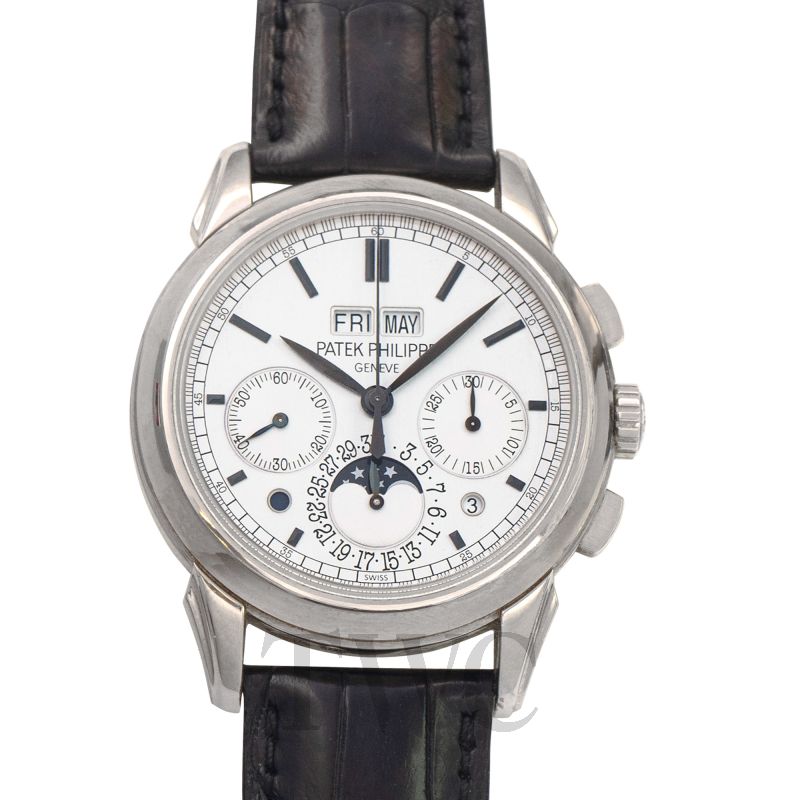
A winder is not automatically necessary for an automatic watch. It can be convenient for complicated calendars, but it also keeps the movement operating. If one is used, match its settings to the movement and avoid continuous excessive winding. A simple watch can usually be allowed to stop and reset later using the correct procedure.
Service according to condition and maker guidance
There is no single service interval for every watch. Movement design, water exposure, wearing frequency and storage all matter. Use the manufacturer's guidance as a starting point and respond to symptoms. A complete service may involve disassembly, cleaning, lubrication, adjustment, seal replacement and testing. Clarify the scope before authorizing work.
Ask whether replaced parts will be returned, how refinishing will be handled and what water-resistance test will be performed. For a vintage watch, preservation of the dial, hands and case geometry may require different priorities from restoration of a modern daily watch.
Keep an ownership record
Save the invoice, reference and serial details, service receipts, pressure-test results and photographs. Record changes in timekeeping or power reserve before service so the watchmaker has useful evidence. The ownership cost calculator can help reserve money for care, while the product warranty information explains the separate role of warranty coverage.