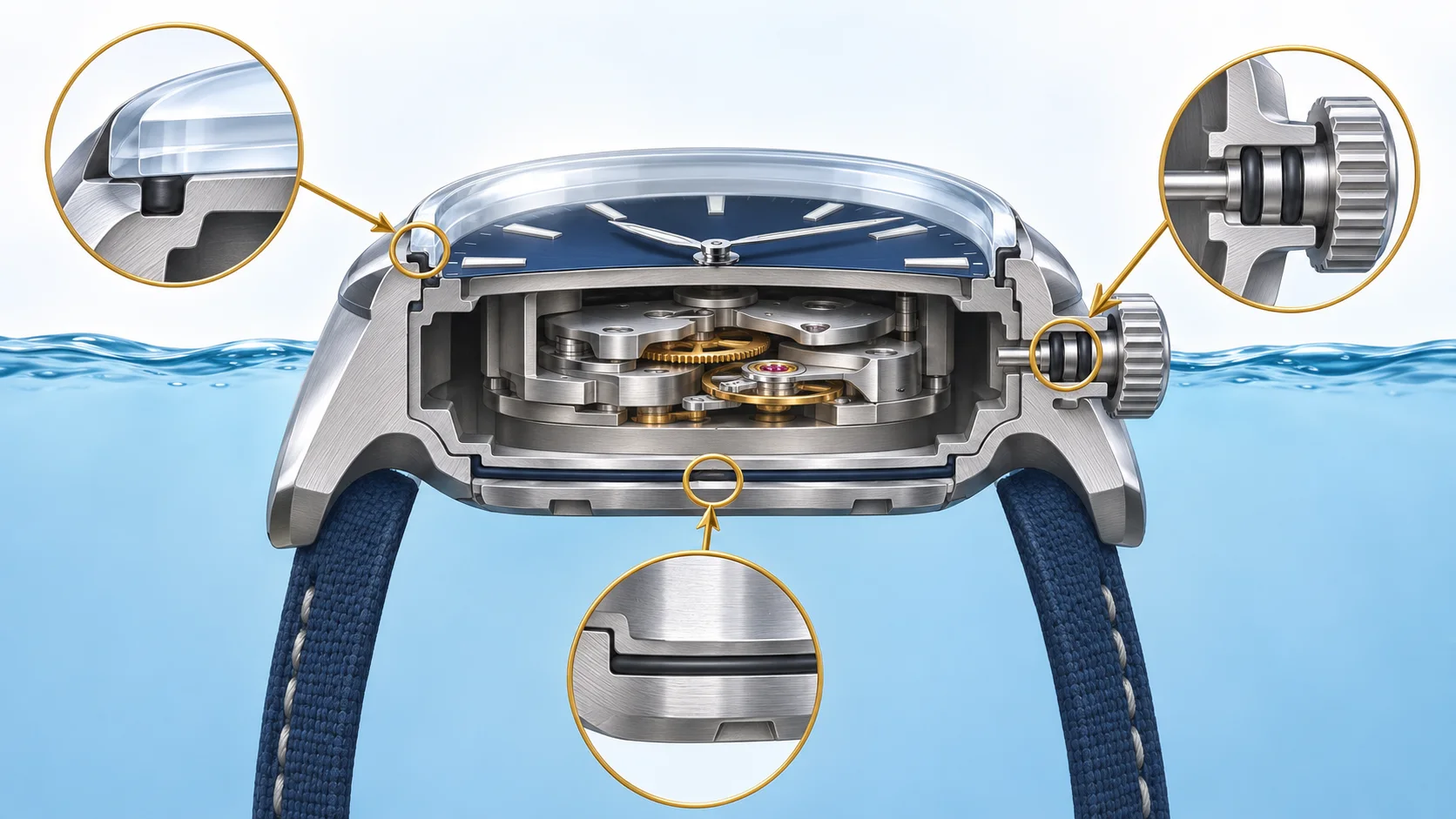
A meter mark is not a literal diving allowance. A watch marked 3 bar, 3 ATM or 30 m is not permission to dive 30 meters. Seiko and Citizen instructions commonly limit 3 bar watches to accidental splashes and rain. A watch marked only 3 m would provide even less stated protection and should not be treated as suitable for immersion. The exact manufacturer's instructions always control.
A water-resistance number describes performance under defined test conditions. It is not permanent. Seals age, impacts can disturb a crown or crystal, and opening the case can change its resistance. Match the current condition of the exact watch to the activity you plan, and obtain a current pressure test before relying on an older or pre-owned watch in water.
Read the rating as a test result
A case marked with a depth or pressure value has been designed and tested to a stated level under controlled conditions. Daily use adds motion, temperature changes, soap, salt, impacts and wear. Those conditions can place different demands on the case than a static laboratory test. Follow the manufacturer's instructions for the exact reference instead of relying on a generic chart.
Do not assume that a vintage watch, a recently purchased pre-owned watch or a watch that has just been opened for service still meets its original rating. A current pressure test gives more useful evidence. The recorded value on a WatchShopping product page is a reference fact, not a fresh test certificate.
Water-resistance ratings and typical activities
This table is a conservative starting point based on published Seiko and Citizen usage guidance. It is not a substitute for the manual for your reference. Some watches tested under ISO 22810 may have broader maker-approved use, while a worn watch may provide less protection than its case-back mark suggests.
| Marking | Typical safe use when current and undamaged | Do not assume |
|---|---|---|
| No water-resistance mark | Keep dry. Protect from rain, splashes and washing. | Any intentional water contact. |
| 3 bar, 3 ATM or 30 m | Accidental splashes, rain and normal perspiration. | Swimming, bathing, snorkeling or diving. It does not mean diving to 30 m. |
| 5 bar, 5 ATM or 50 m | Ordinary swimming when the maker permits it and the watch has current seals. | Skin diving, scuba diving, hot showers or operating the crown underwater. |
| 10 bar, 10 ATM or 100 m | Swimming and shallow water activity when allowed by the maker. | Scuba diving merely because the dial says 100 m. |
| 20 bar, 20 ATM or 200 m without a diver's designation | Swimming and shallow or skin diving when the maker explicitly permits it. | That every 200 m watch meets the separate requirements for a diver's watch. |
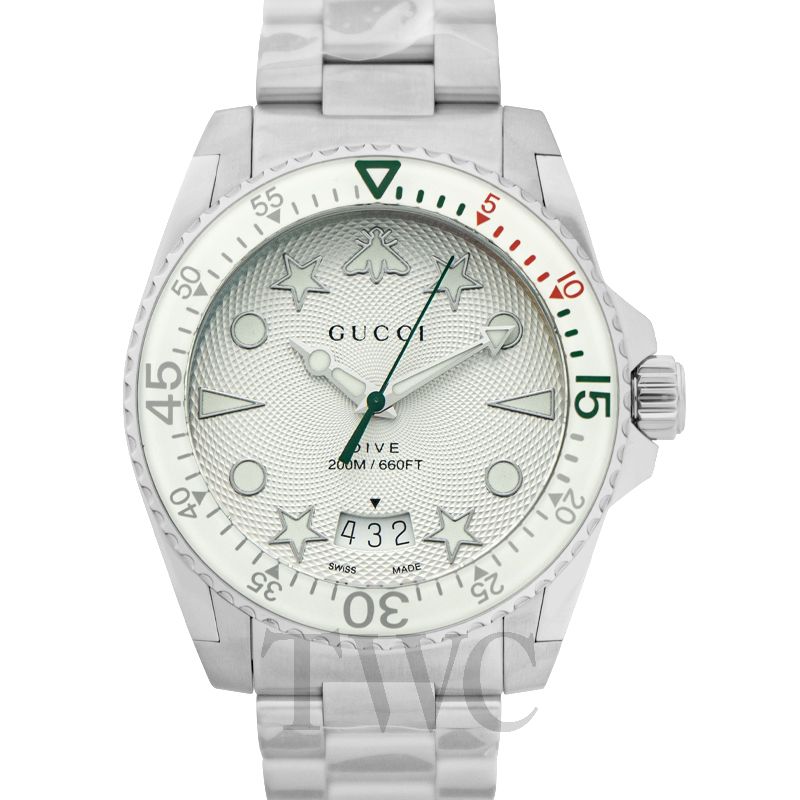
| Diver's 200 m or an explicit scuba-diving designation | Scuba diving within the maker's operating limits after the watch passes the required checks. | Saturation diving, unlimited depth or permanent water resistance. |
| Professional saturation-diving designation | Only the diving use and limits stated by the maker for that exact professional model. | That another watch with the same numerical depth rating has the same capability. |
Bars and atmospheres are pressure units. Meter markings are a conventional way of expressing the related test pressure. They do not describe how deep the owner should take a watch. A professional diving watch is a specific product category with additional requirements and instructions, not simply any watch with a large number on its dial or case back.
What to verify before water use
- Exact instructions: Read the manual for the reference and movement.
- Current condition: Check the crown, crystal, pushers and case for damage.
- Recent evidence: Use a dated pressure-test result, not appearance alone.
- Planned activity: Tell the service provider whether the watch will face rain, swimming or diving.
Know where water can enter
The crown, case back, crystal, pushers and helium valve, when fitted, all create possible entry points. Gaskets form seals at these openings. They can harden, compress, move or become damaged. A crown that screws down helps secure one opening, but it cannot compensate for a failed crystal gasket or poor case-back seal.
Before contact with water, make sure the crown is fully closed in the manner specified by the maker. Never force it. Chronograph pushers should not be operated underwater unless the instructions for that exact watch explicitly permit it. A design that looks like a dive watch may still have operating limits that differ from a professional diving model.
Choose activities by current evidence
Hand washing, surface swimming and diving are not interchangeable uses. Pressure can change with movement, depth and impact. Hot water and steam add rapid temperature changes that can affect seals and create condensation. Soap and cleaning products can also reduce surface tension or damage a strap, so a water-resistant case does not make every part of the watch suitable for a shower or hot tub.
If water use matters, ask a qualified watchmaker or authorized service center to test the assembled watch. Describe the planned activity and request the test result in writing. Review the watch care and maintenance guide for cleaning and inspection habits after salt water or heavy exposure.
Pressure testing has more than one form
A dry test measures case deformation or air movement without placing the watch in water. A wet test can help locate a leak under controlled procedures. The correct method depends on the watch and the service provider. A test should be performed by someone who understands the case construction and can respond safely if the result is poor.
Ask what pressure was used, whether the movement remained in the case and whether the result was pass or fail. A vague statement such as checked for water resistance provides less evidence than a dated result tied to the watch. Keep the record with the invoice and other service documents.
Respond to condensation without delay
A light haze that appears briefly after a temperature change may still indicate moisture inside the case. Visible droplets are more urgent. Move the watch away from water, do not keep operating the crown or pushers, and seek professional inspection promptly. Waiting for the display to clear can allow corrosion to continue on the movement, dial and hands.
Do not use a hair dryer, oven, radiator or bag of rice. Heat can harm lubricants, finishes and seals, while a household drying method does not remove salts or identify the failed entry point. Professional inspection can open the case safely, assess damage and replace the necessary seals.
Build water checks into ownership
Have water resistance reviewed after the case is opened and before planned swimming or diving. Also arrange a check after a sharp impact, visible crown damage or unexplained condensation. Testing frequency depends on use, maker guidance and condition, so a universal calendar interval should not replace inspection of the exact watch.
Use the watch reference finder to identify the model, then confirm its current instructions with the maker. Compare relevant records in the diving watch catalog, but treat every recorded rating as a research starting point. Current seals and a documented test decide whether a particular watch is ready for water.