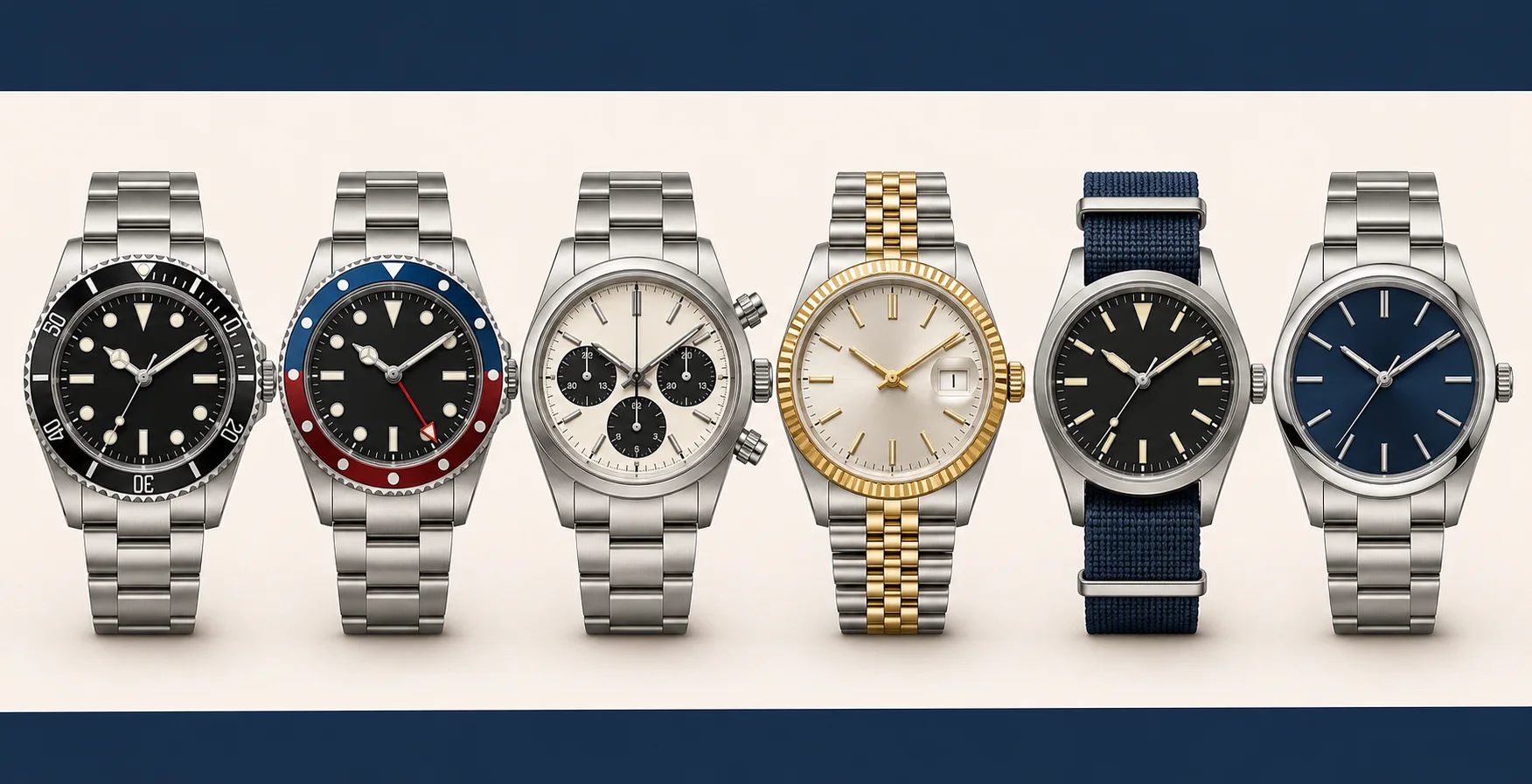
Rolex collection names describe a purpose and design family, but they do not identify one fixed watch. Size, movement, metal, bezel, bracelet and dial can change between references and generations. Choose the family by use, then research the complete reference before comparing price or condition.
Submariner and Sea-Dweller serve different dive-watch needs
The Rolex Submariner collection is recognized by its rotating timing bezel and legible dive-watch layout. Date and no-date versions exist, and generations differ in dimensions, movements, bracelets and bezel materials. A seller's use of the word Submariner is therefore only the start of identification.
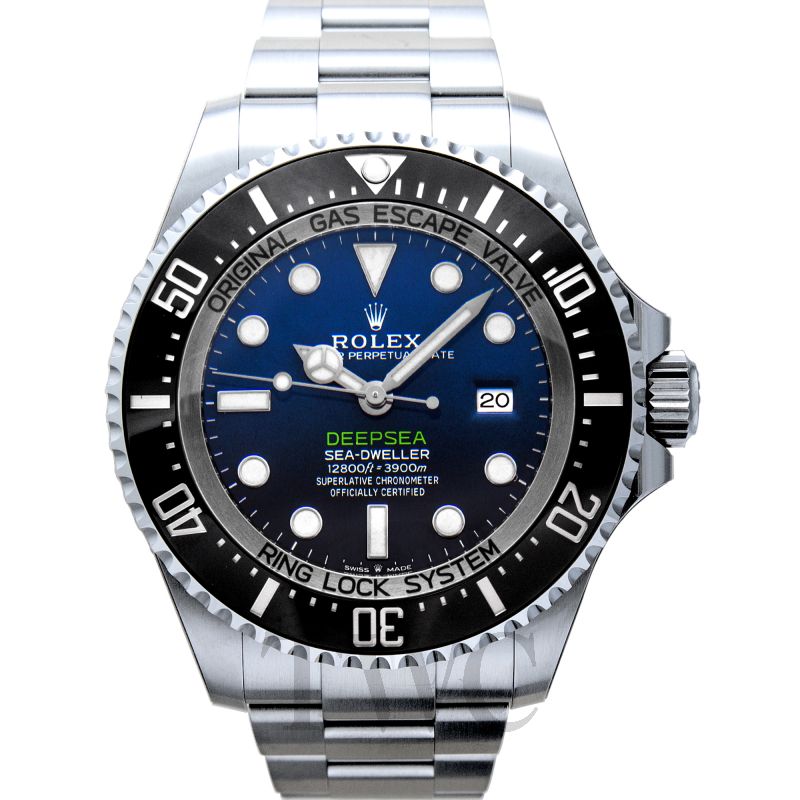
Sea-Dweller models extend the professional diving concept and are generally more specialized. Some references add features or construction intended for deeper use. Compare thickness, wrist fit and the exact water-resistance specification instead of assuming the more capable rating is automatically better for daily wear.
GMT-Master II is built around travel time
The Rolex GMT-Master II collection combines an additional hour hand with a 24-hour bezel. It can show another time zone while preserving the main local display. Reference differences include bezel color and material, case generation, movement and bracelet.
When comparing examples, check bezel alignment and operation, crown setting functions, bracelet reference and service history. Popular color nicknames are convenient in conversation, but the full reference and configuration provide a more reliable research key.
Cosmograph Daytona adds chronograph complexity
The Rolex Cosmograph Daytona collection uses a chronograph to measure elapsed time. The tachymeter scale, screw-down pushers and three-register dial create a distinct ownership experience from a simple time-and-date watch.
Daytona generations can differ materially in movement, case metal, bezel and dial details. Test chronograph start, stop and reset operation on a pre-owned example. Dial originality and service replacements can also matter greatly, so broad model-name comparisons are not enough.
Explorer families emphasize legibility and travel
Explorer models focus on a clear time display and durable everyday format. Explorer II adds a fixed 24-hour bezel and an additional hand, giving it a different visual scale and function. The two names are related, but they should not be treated as size variants of the same design.
Check case size and bracelet generation carefully because fit can change across references. Lug span and fixed end links can make two watches with a similar diameter feel quite different on the wrist.
Datejust and Day-Date offer many configurations
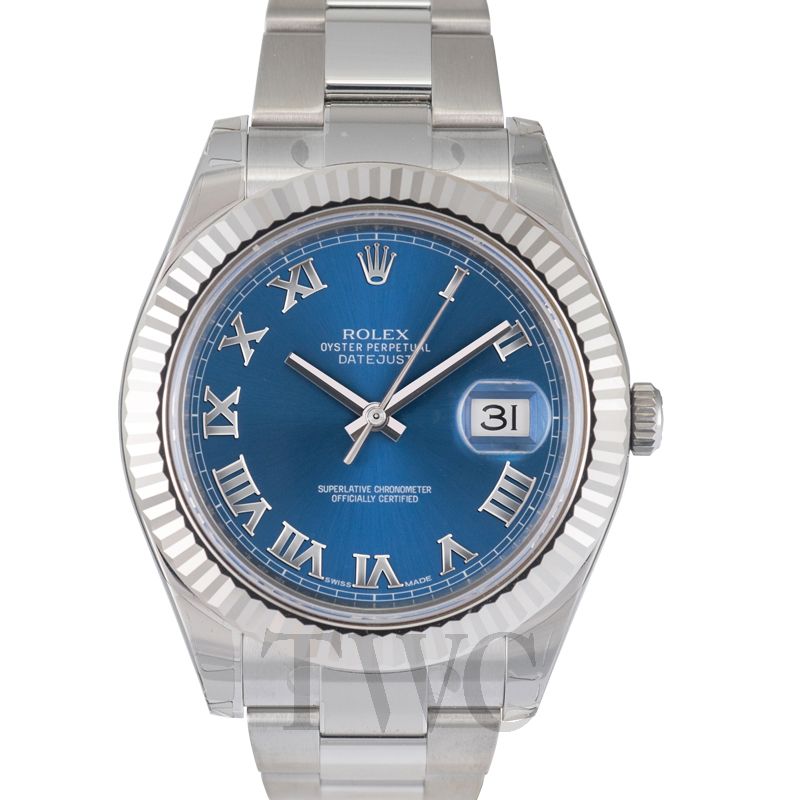
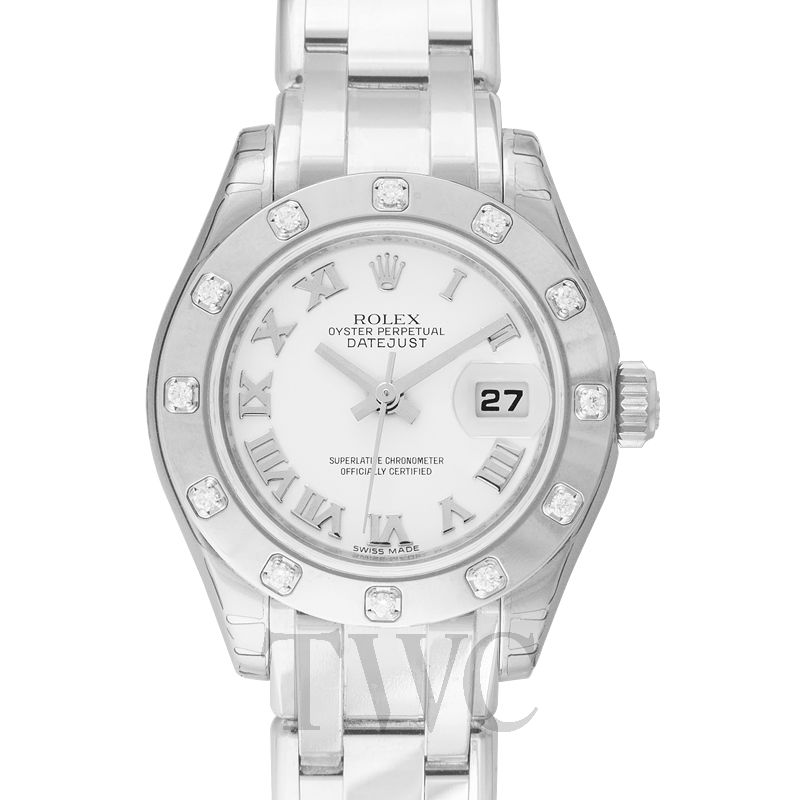
Datejust references span multiple sizes, metals, bezels, bracelets and dials. The date display and magnifying lens are familiar identifiers, but they do not tell you whether two examples share the same generation or construction. This range makes Datejust useful for many wrists and styles, yet it also demands exact-reference research.
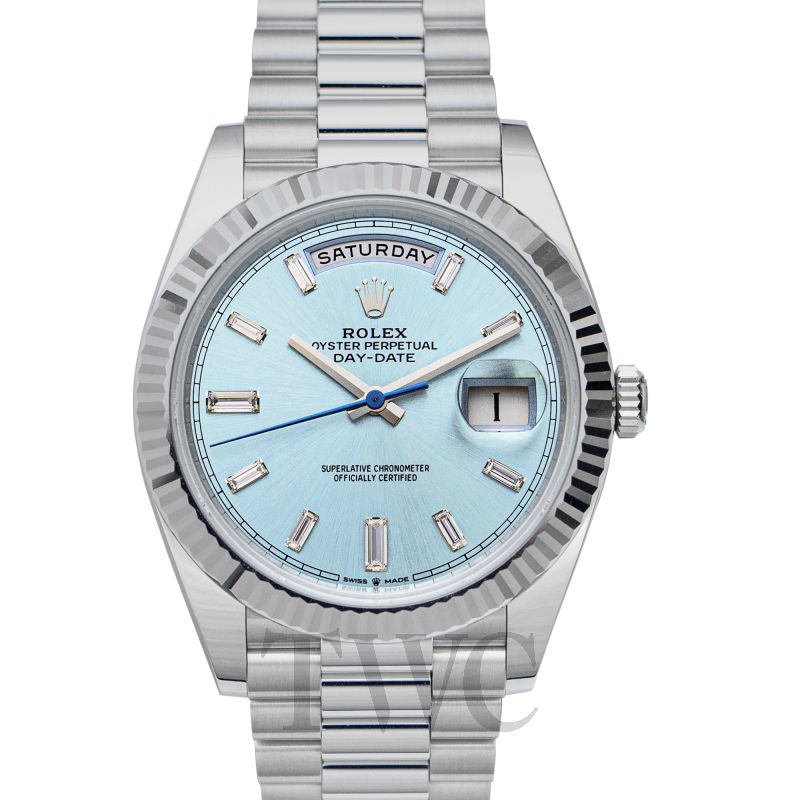
Day-Date models pair a date with a fully written day display and use precious-metal cases. Bracelet completeness, case refinishing and dial configuration deserve particular attention in pre-owned comparisons. Do not infer material or originality from appearance alone.
Oyster Perpetual keeps the format direct
Oyster Perpetual models use a straightforward time-only layout. Dial colors and sizes can attract most of the attention, but reference, movement generation and fit still matter. A simple display does not remove the need to inspect bracelet condition, service history and water-resistance testing.
This is often the easiest Rolex family to understand at first glance, but it still rewards a careful try-on. A bright dial can look larger than a dark one, and a newer bracelet may feel more solid than an older example. Compare the complete watch on the wrist instead of choosing from a dial photo alone.
Yacht-Master applies a nautical timing design
Yacht-Master models use a rotating timing bezel in a more polished nautical design, while Yacht-Master II references use a specialized regatta chronograph system. Despite the shared name, their displays and functions differ considerably. Confirm which family a listing actually represents.
How to choose and verify a Rolex reference
Begin with function: dive timing, travel time, chronograph, date display or simple everyday timekeeping. Then compare size, metal, bezel, dial, bracelet and movement. Use the watch reference finder and browse the Rolex watch catalog to research recorded configurations.
For a pre-owned purchase, follow the pre-owned watch checklist. Rolex demand also attracts altered and assembled watches, so a recognizable model name, box or card should never replace careful examination and written seller disclosures.
A useful shortlist should contain exact references, not just collection names. Put the reference, size, movement, bracelet and known service work on one page. That simple record makes it easier to compare two watches honestly and to spot when a listing leaves out an important fact.