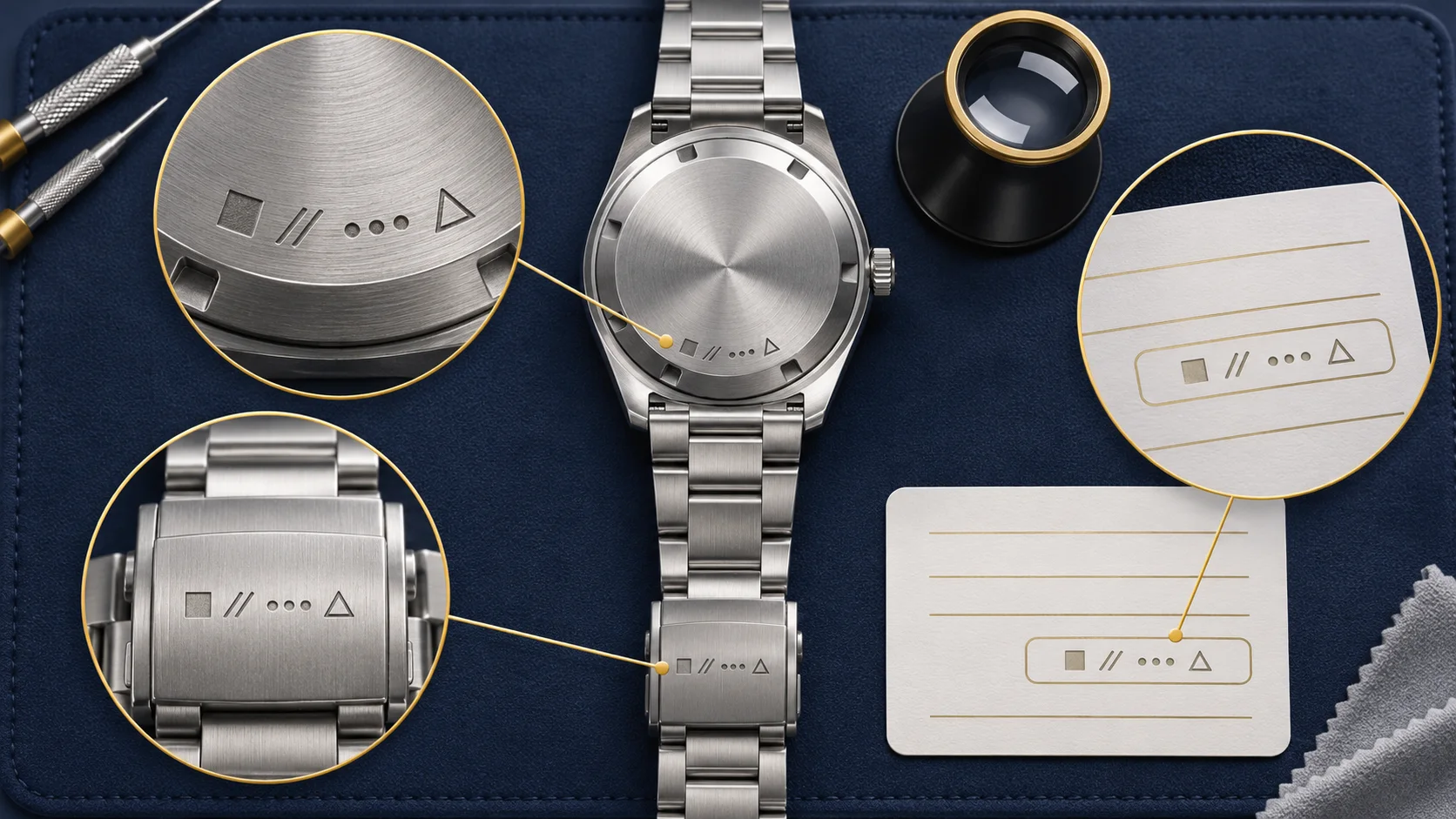
A watch reference number identifies a model or configuration in a maker's catalog. It is not the same as a serial number, and it does not follow one universal code across brands. The safest method is to record the complete reference exactly as shown, then verify what that code means using material for the same maker and production period.
Separate reference, serial and movement numbers
The reference links the watch to a model configuration. A serial number usually distinguishes an individual item or production sequence. A caliber number identifies the movement design. A bracelet, clasp or case component may carry its own code. These identifiers can support one another, but they answer different questions.
Do not publish a complete serial number in a public listing. It can be shared through a secure channel with a qualified service provider or verified buyer when necessary. A reference number is generally safer to use for catalog research because it describes the model rather than one owner's property.
Copy every character and separator
Letters, zeros, slashes, periods and suffixes can distinguish a size, dial, case metal, bracelet or market version. Removing them may turn a precise code into a broad family. Copy the identifier from the watch and documents, photograph its location when appropriate, and preserve the original spacing before trying alternative search formats.
Use the watch reference finder with the full code first. If no match appears, try a partial core number and compare the returned names carefully. A partial match is a lead, not proof that the watch is the same configuration.
Find the code in more than one place
Depending on the brand and era, a reference may appear between the lugs, on the case back, inside the case, on a warranty card or in a service record. Accessing an internal mark may require tools and should be left to a qualified professional. An exterior engraving can also be worn, polished or copied.
Compare the physical mark with the card, invoice and service paperwork. Differences can result from a transcription error, replacement case, mismatched papers or a more serious problem. Ask for an explanation and supporting records instead of choosing the code that produces the most valuable search result.
Decode only with brand-specific evidence
Some makers use structured positions that indicate material, bezel, dial or bracelet. Others use a sequential or collection-based system, and codes can change over time. Online charts are often incomplete or mix generations. Verify the interpretation against official manuals, service documents or well-documented records for the same period.
A suffix may describe a retail configuration rather than a permanent feature of the case. Bracelets and straps can also be changed during ownership. Treat the full watch as a set of evidence rather than forcing every visible component to match one internet decoding table.
Use the reference to compare like with like
Once the reference is confirmed, compare case dimensions, movement, dial, bezel, bracelet and production period. The watch reference catalog can show recorded examples, while the luxury watch buying guide explains how the code fits into a broader purchase decision.
For a pre-owned example, note whether components are original to the reference, genuine service replacements, aftermarket additions or unknown. The watch authenticity guide explains why a correct-looking number cannot authenticate the whole watch by itself.
Create a durable research record
- Write the complete reference exactly as observed.
- Record where it appeared and who inspected it.
- Keep photographs that do not expose a full serial publicly.
- List the movement, dial, case and bracelet evidence beside it.
- Save the source and date for every decoded claim.
Add a plain-language note beside the code. State the collection, case size, material, dial and bracelet you believe it represents. This helps another person understand the record without repeating your search, and it exposes any detail that still rests on a guess.
Date the note and name the source you used. Catalogs, manuals and service records can be updated or interpreted differently. A source date lets you return to the same evidence later and explain why you reached that result.
This record prevents a common mistake: comparing two watches under the same collection name when they differ in generation or configuration. If the reference remains uncertain, label it uncertain. A clear unknown is more useful than a confident but unsupported identification.